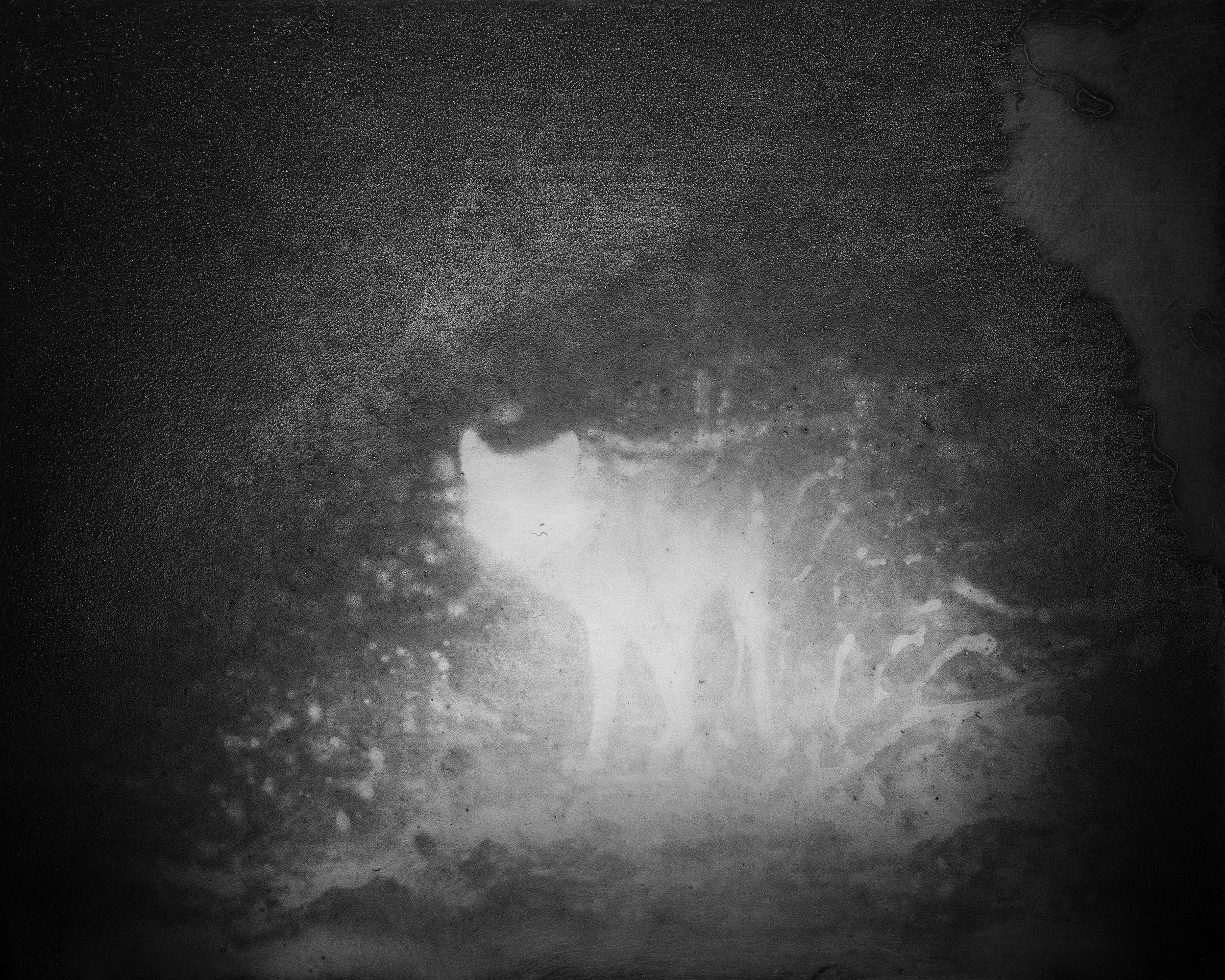

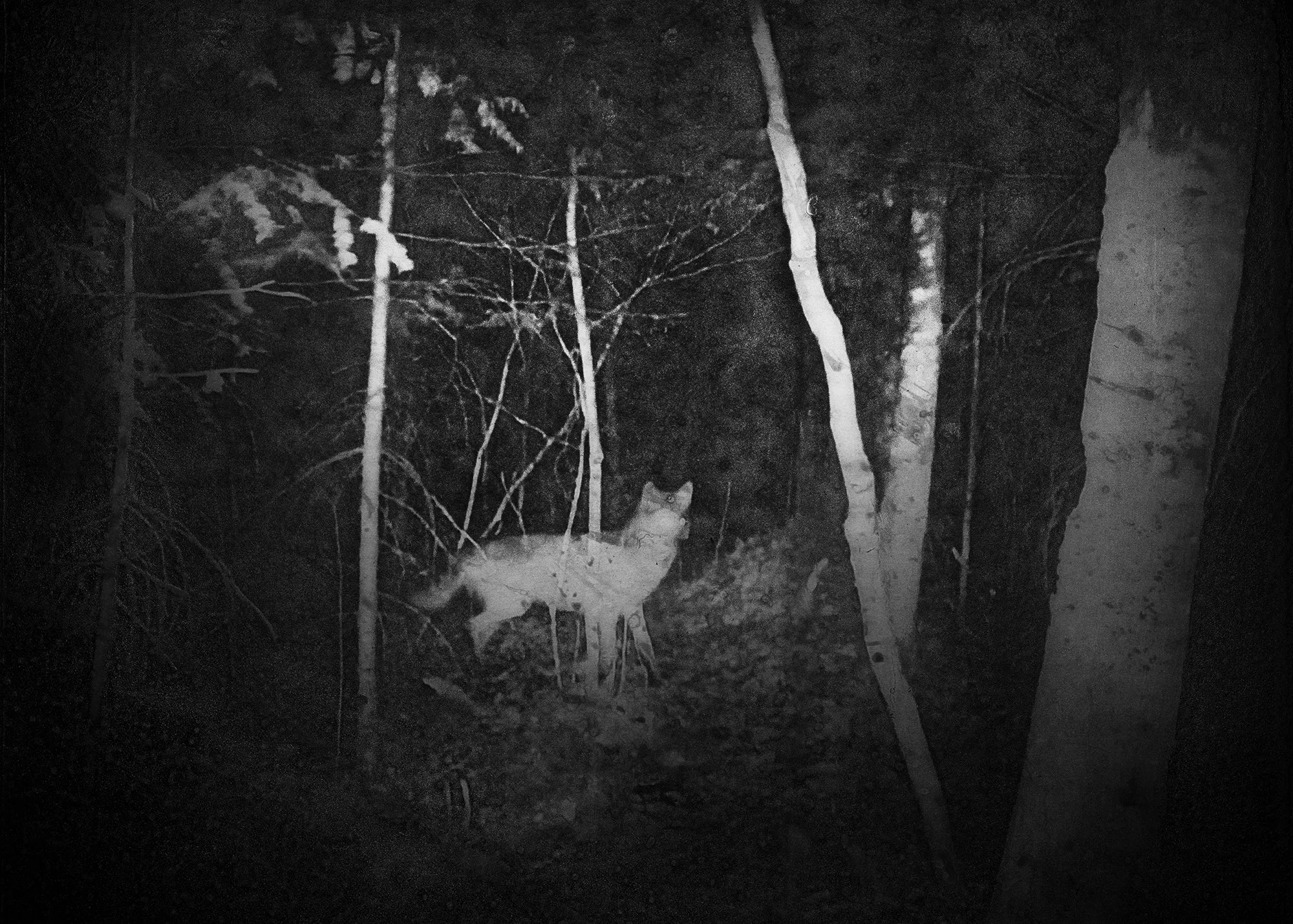
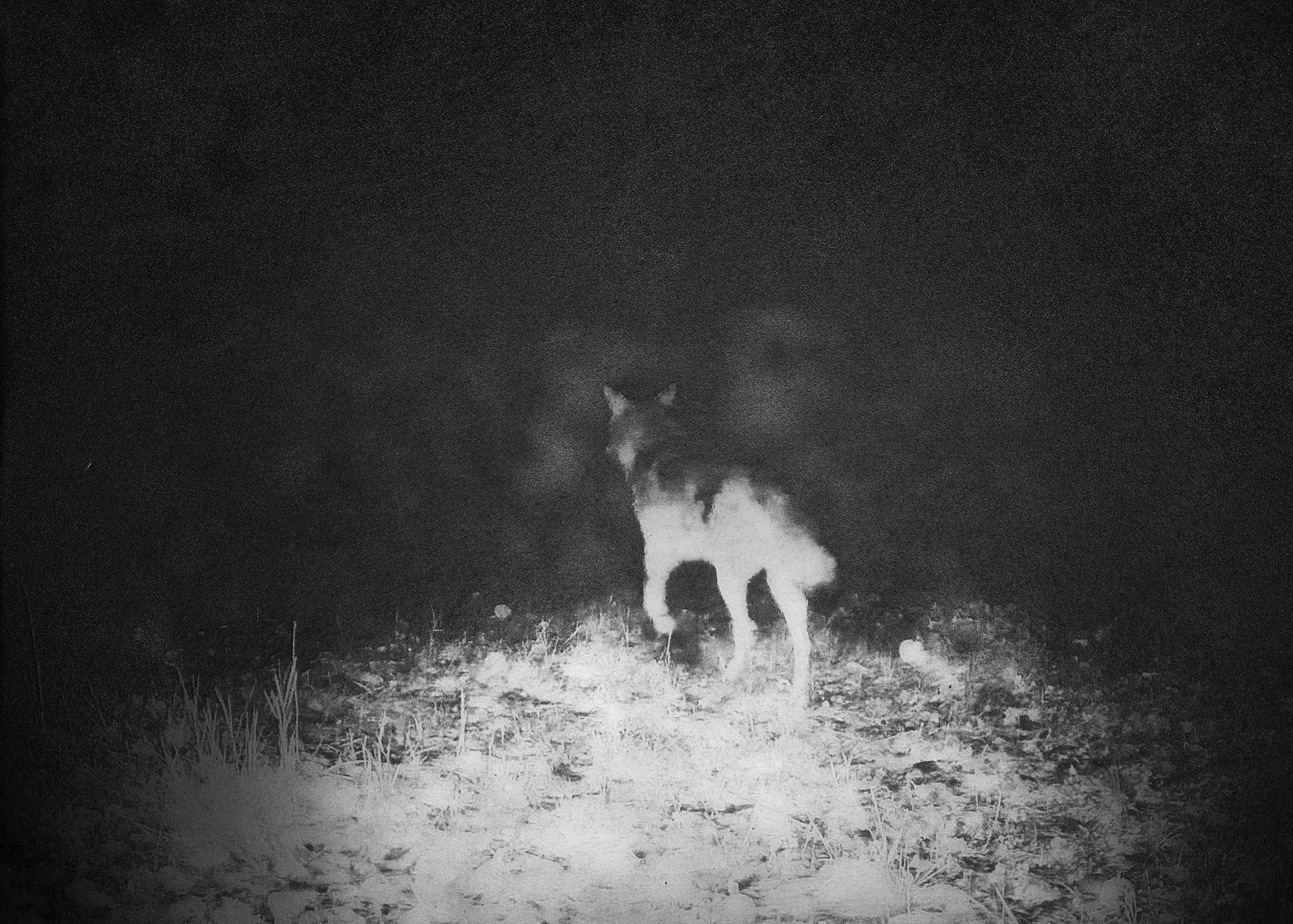
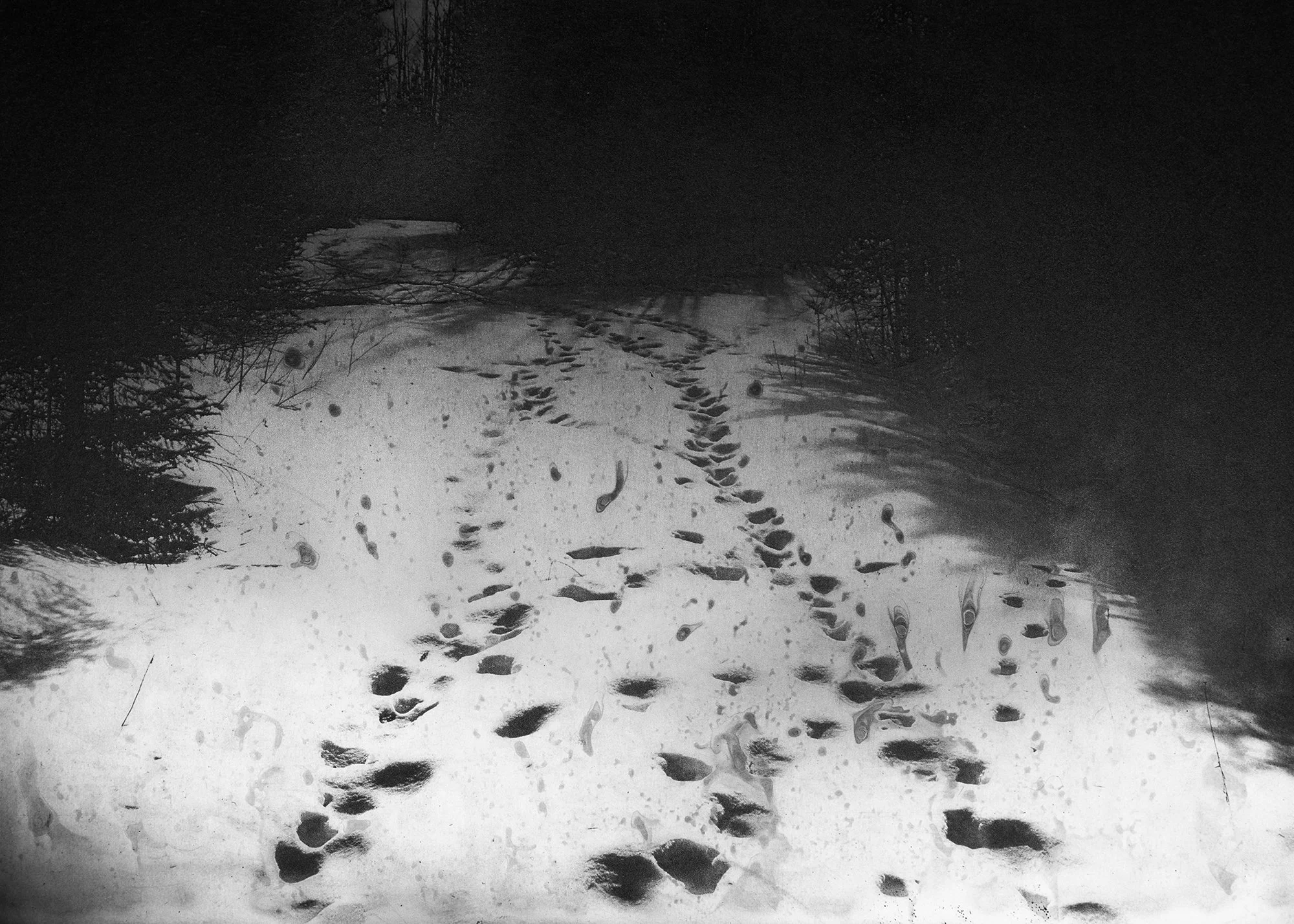
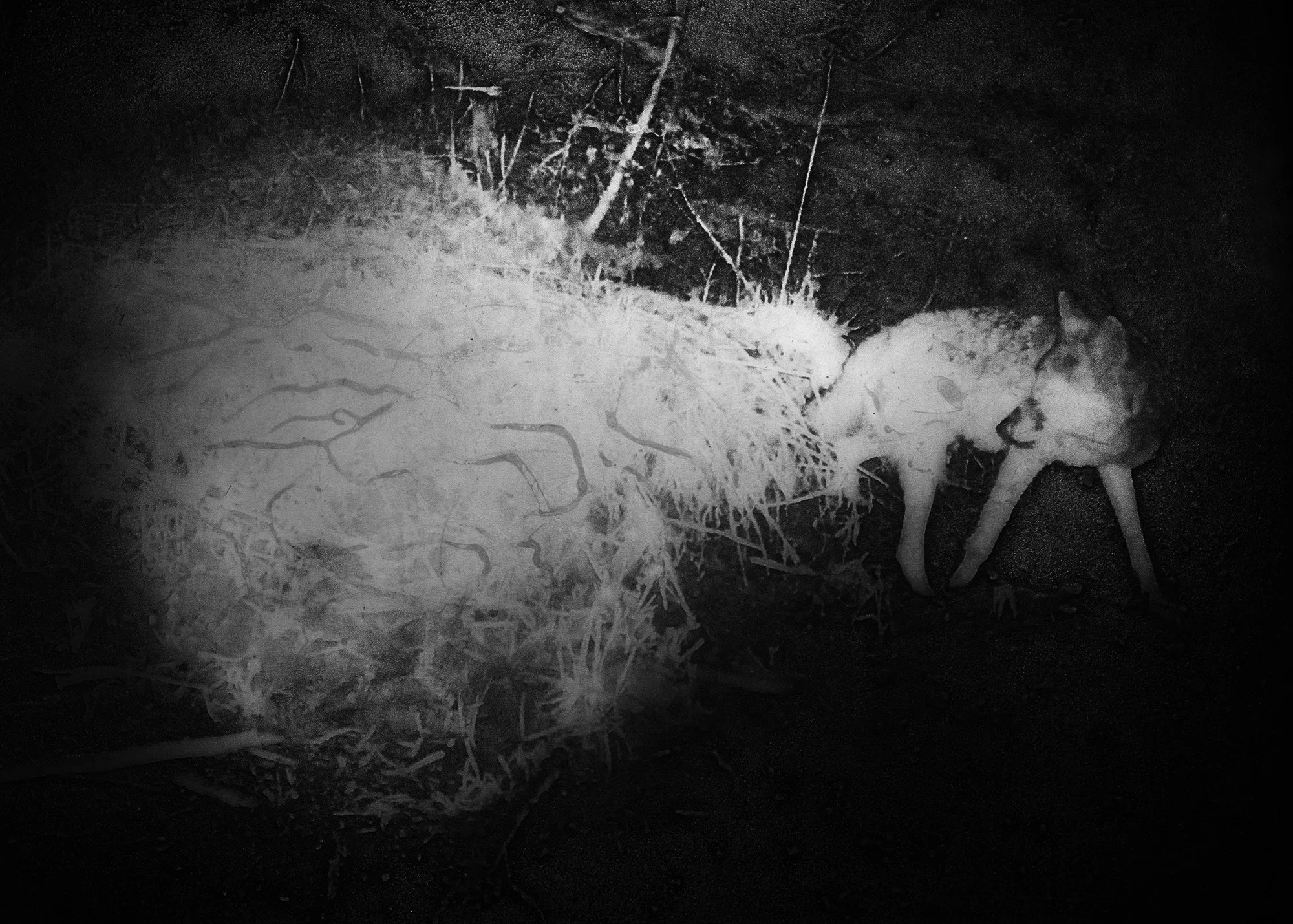


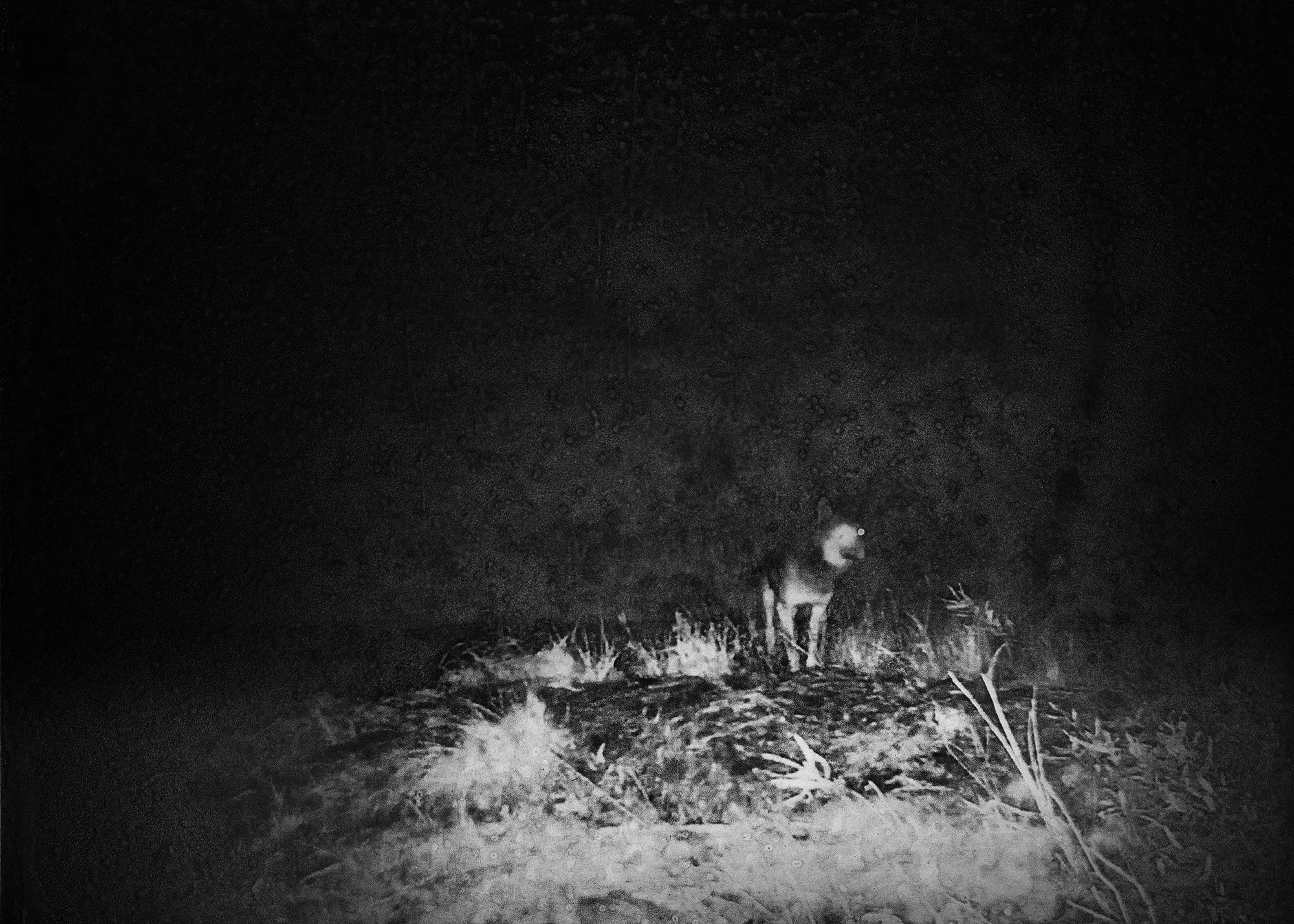
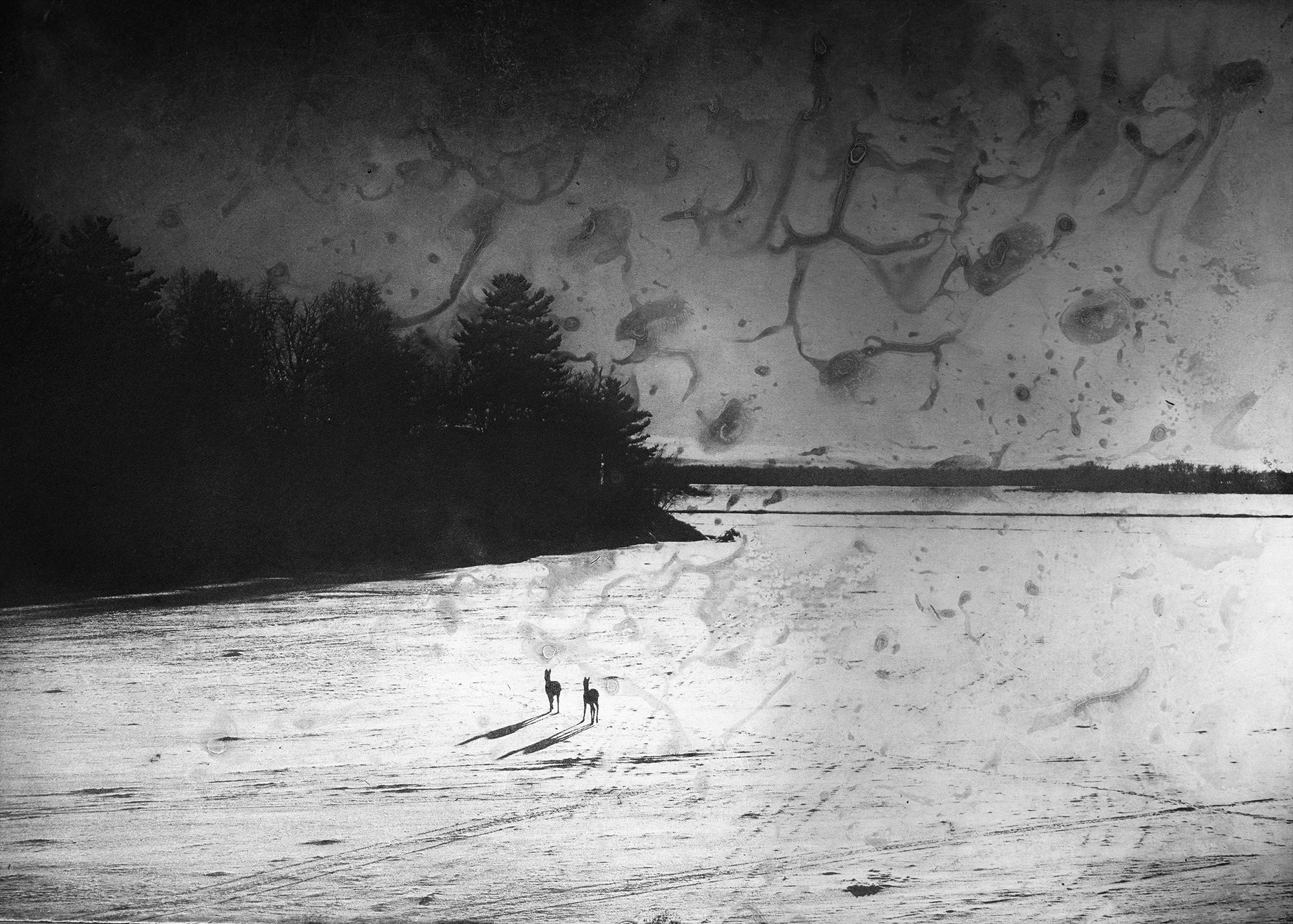

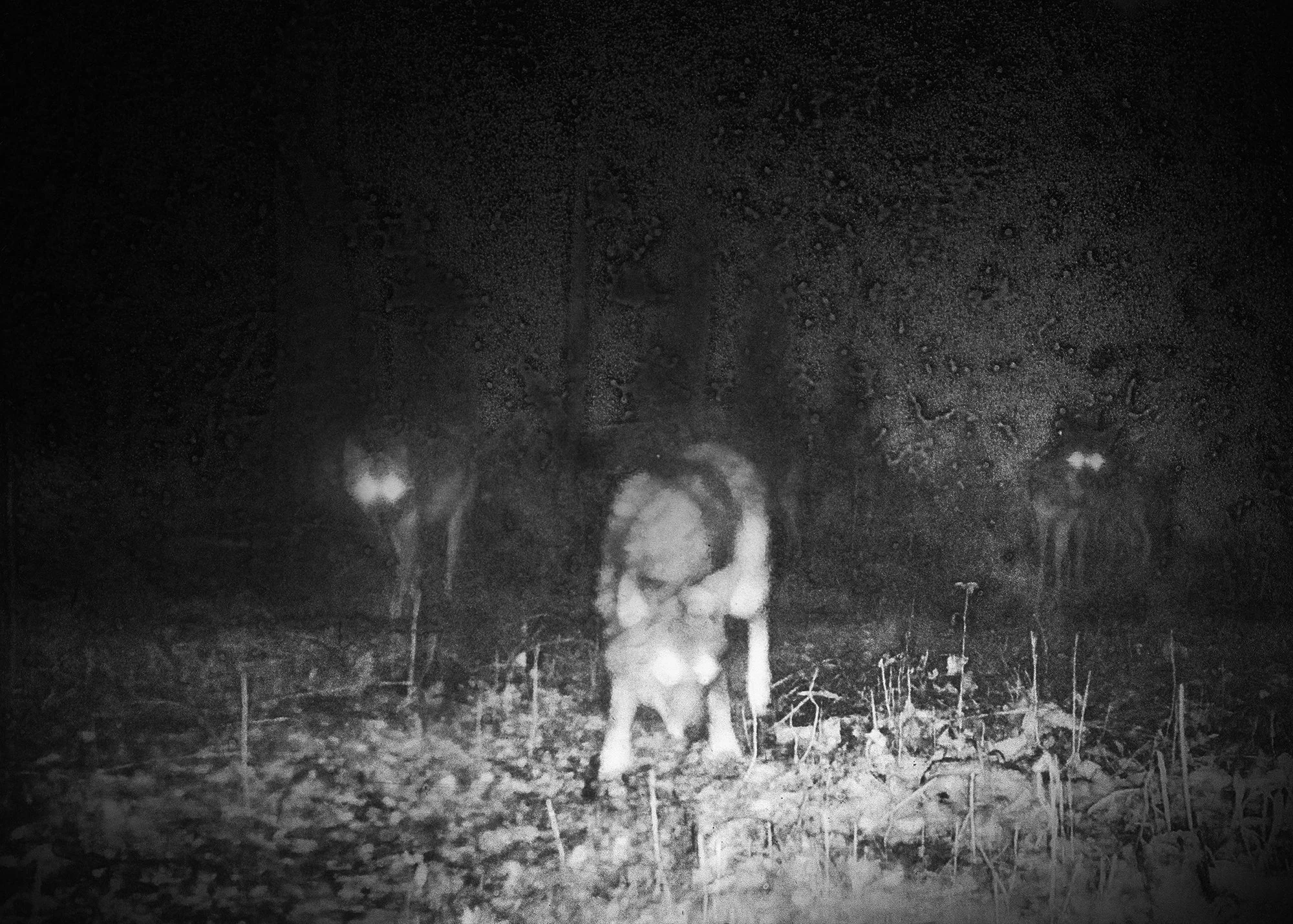
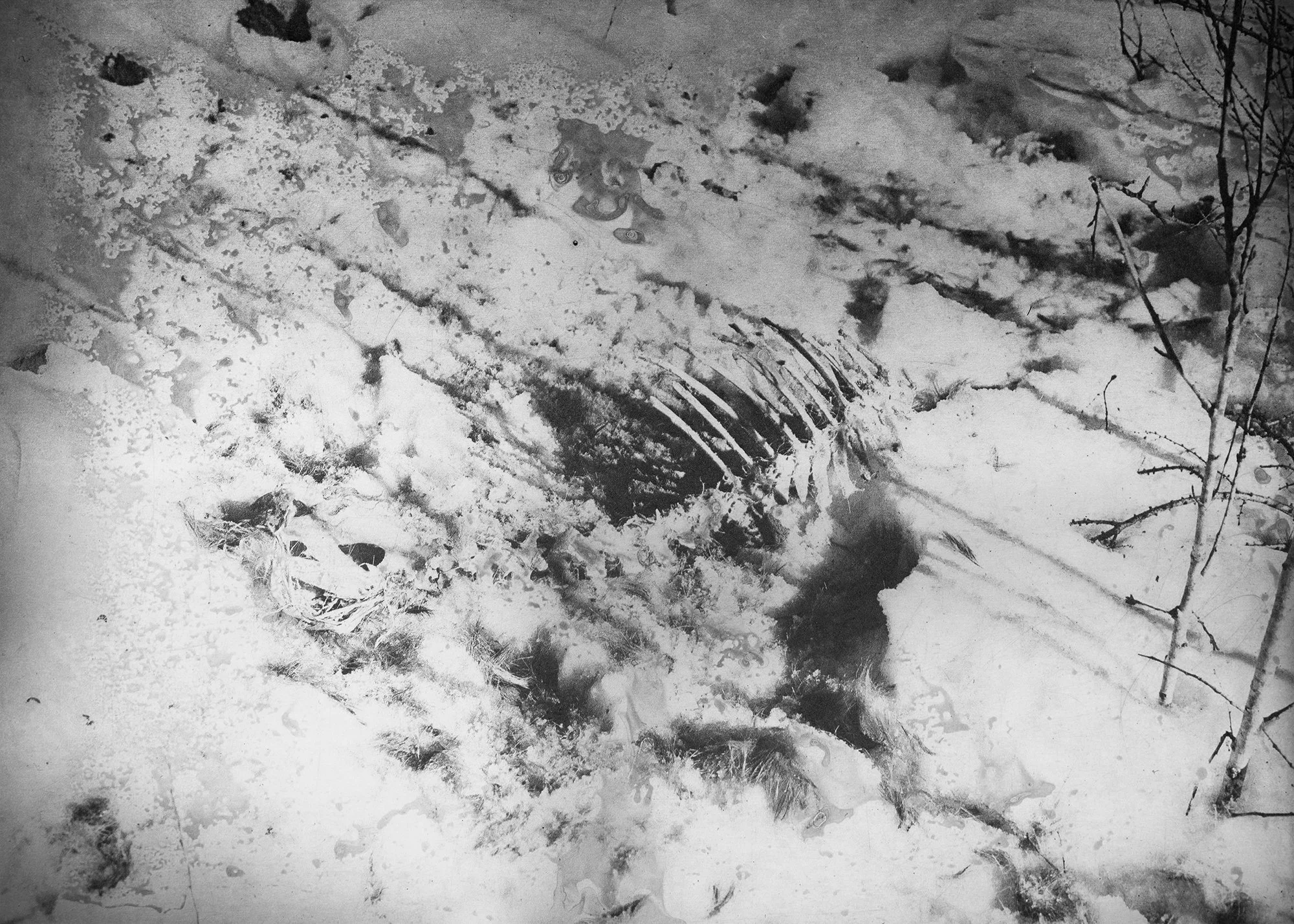

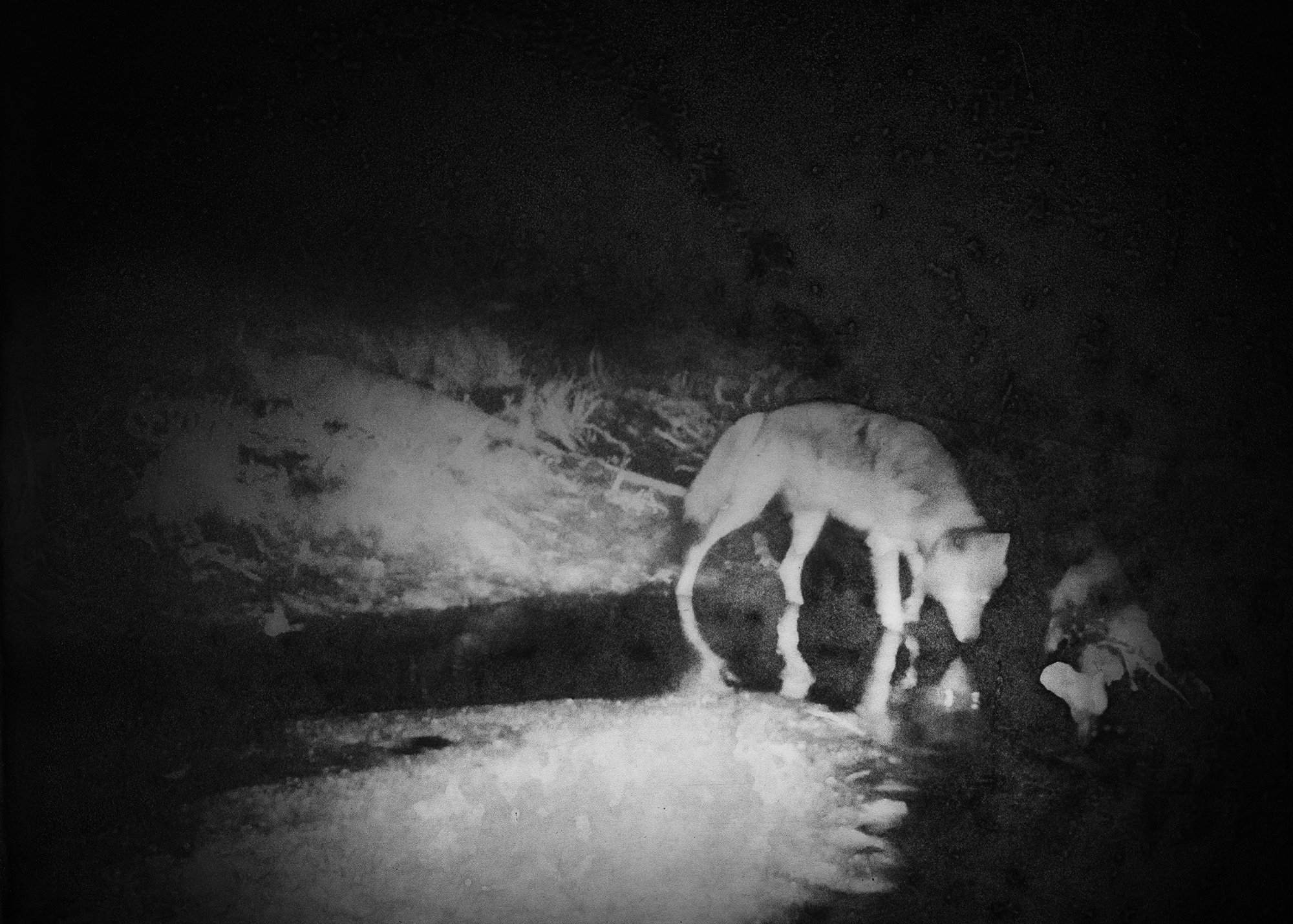
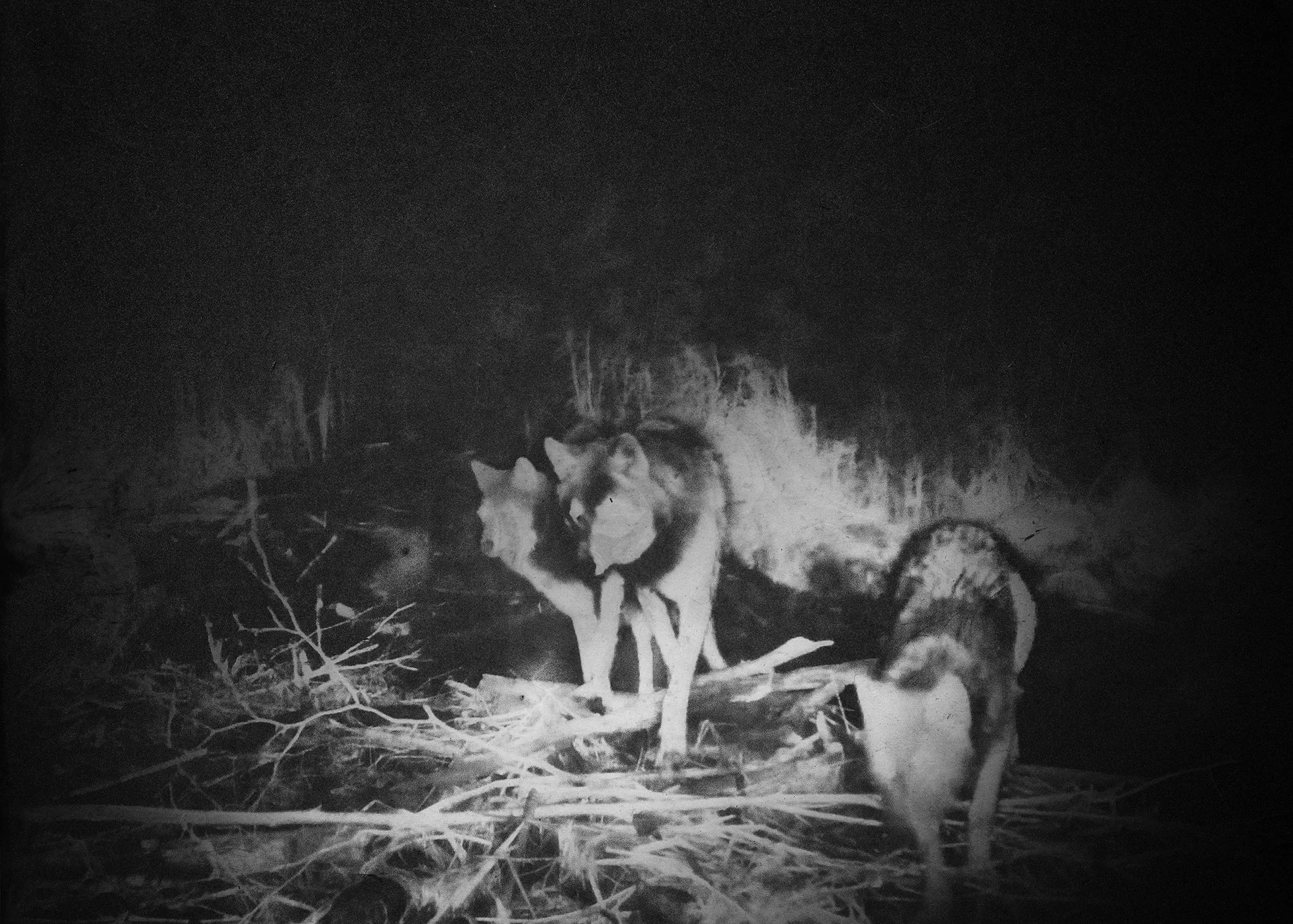
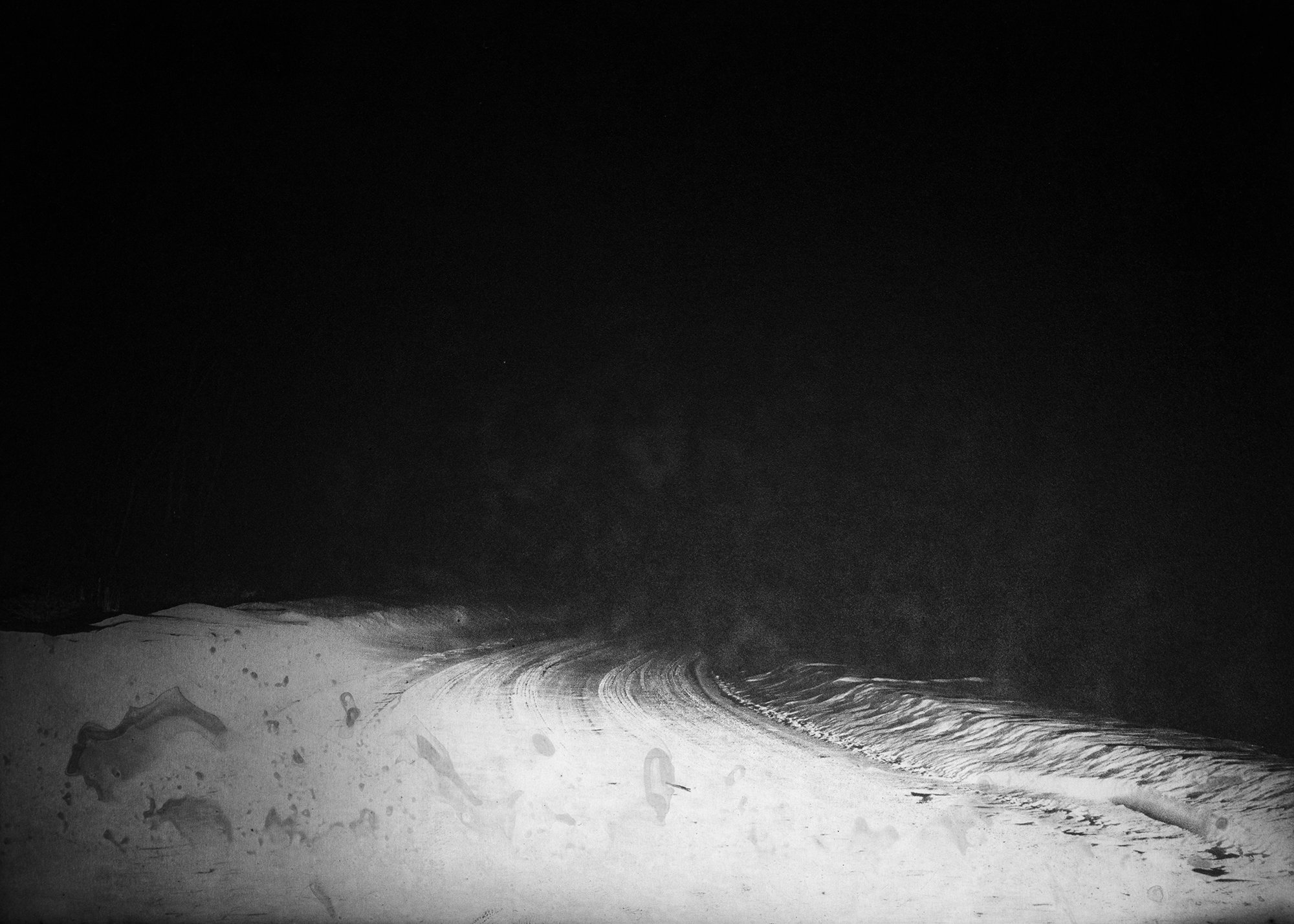
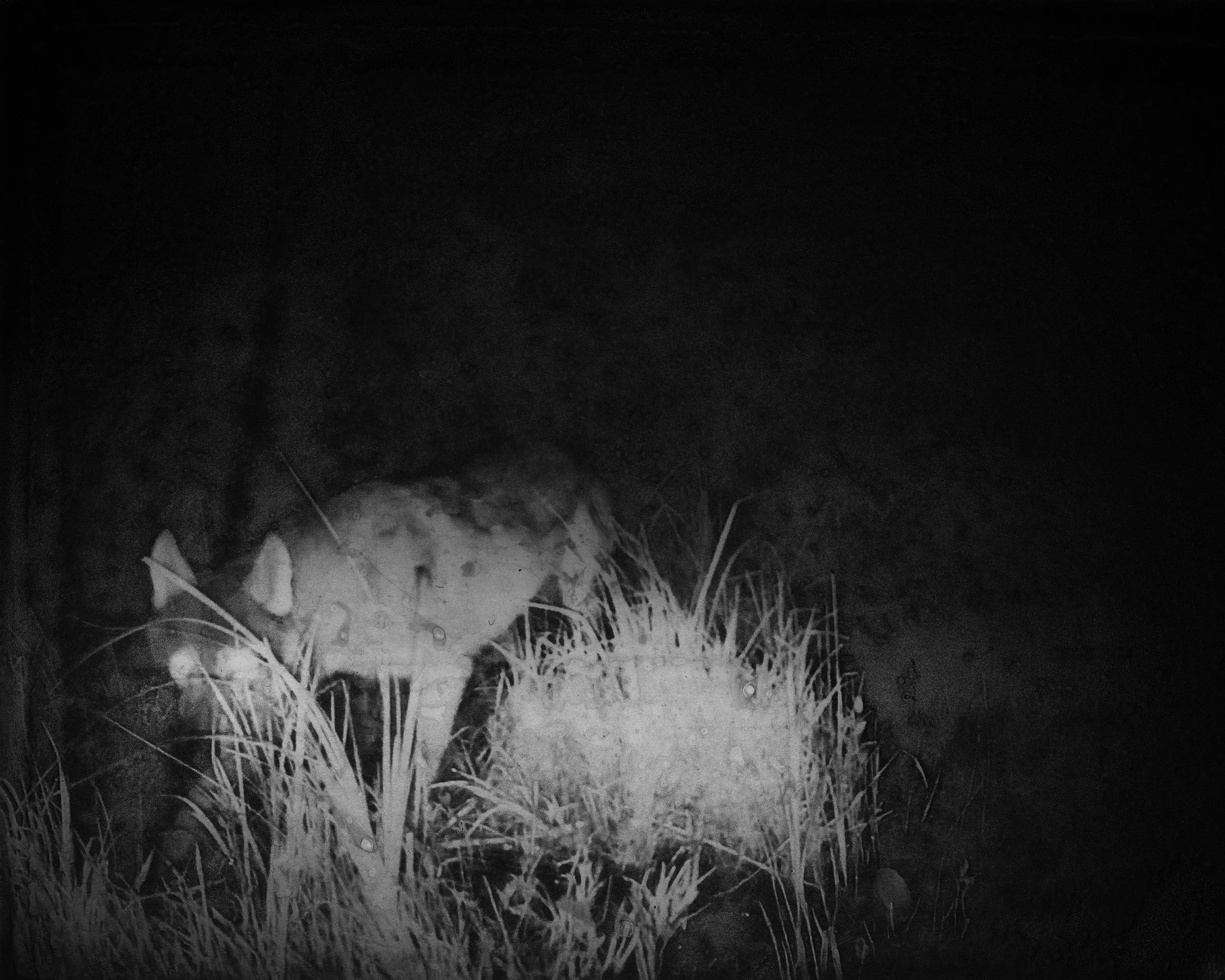
These pictures are made in Northern Minnesota, using a mix of traditional and motion sensor cameras processed using printmaking techniques and photography. The wolves here are the only ones in the lower 48 to never be completely eradicated, only because of the extreme remoteness of the region. In the 1600s it was estimated that 2 to 3 wolves lived in every 10 square miles of land in the continental U.S., including Detroit, where I live. The Europeans who encountered these wolves had largely never seen one before but met them with the fear and hatred inherited from their folklore. Beliefs haven’t changed, though our landscapes have. Now I must drive over 30 minutes to find a forest big enough to escape the sounds of traffic. The woods I find now feel empty, domesticated. Wolves can thrive anywhere where they are tolerated by people. That so few of those places remain, and that laws towards them range from full protection to state hunting bounties, says much to an American confusion and distaste towards wildness.
Our lives are too short to see the world we make. Every generation of people is born into a new reality and deprived of a felt knowledge of what has been lost. This extinction of experience guarantees there will never be a reality we aren’t able accept. It takes active imagination to create a different reality than the one we inherited. This is a real, present landscape. But for most of us, it’s as if it never existed.